The Orpington Breed Standard — Poultry Club of Great Britain
The breed standard for the Orpington chicken as recognised by the Poultry Club of Great Britain (PCGB) — type, plumage, color varieties, weight, and faults, for both Large Fowl and Bantam.
Preamble
The Orpington is a chicken breed of British origin, developed by William Cook in the parish of Orpington, Kent, England, in 1886. It was originally bred as a dual-purpose breed for both meat and egg production.
This standard is compiled with reference to the principal documents: the British Poultry Standards issued by the Poultry Club of Great Britain (PCGB) and the breed-specific standards of the The Orpington Club (UK), which has overseen the breed's standards since the late nineteenth century.
In the United Kingdom, the standard places primary emphasis on a broad, deep, cobby body type with close-fitting plumage — the breed's defining silhouette. The PCGB standard differs in certain details from the American Poultry Association (APA) standard, particularly in weight, overall conformation, and recognised colour varieties.
General Appearance
A sound Orpington under the PCGB standard must demonstrate:
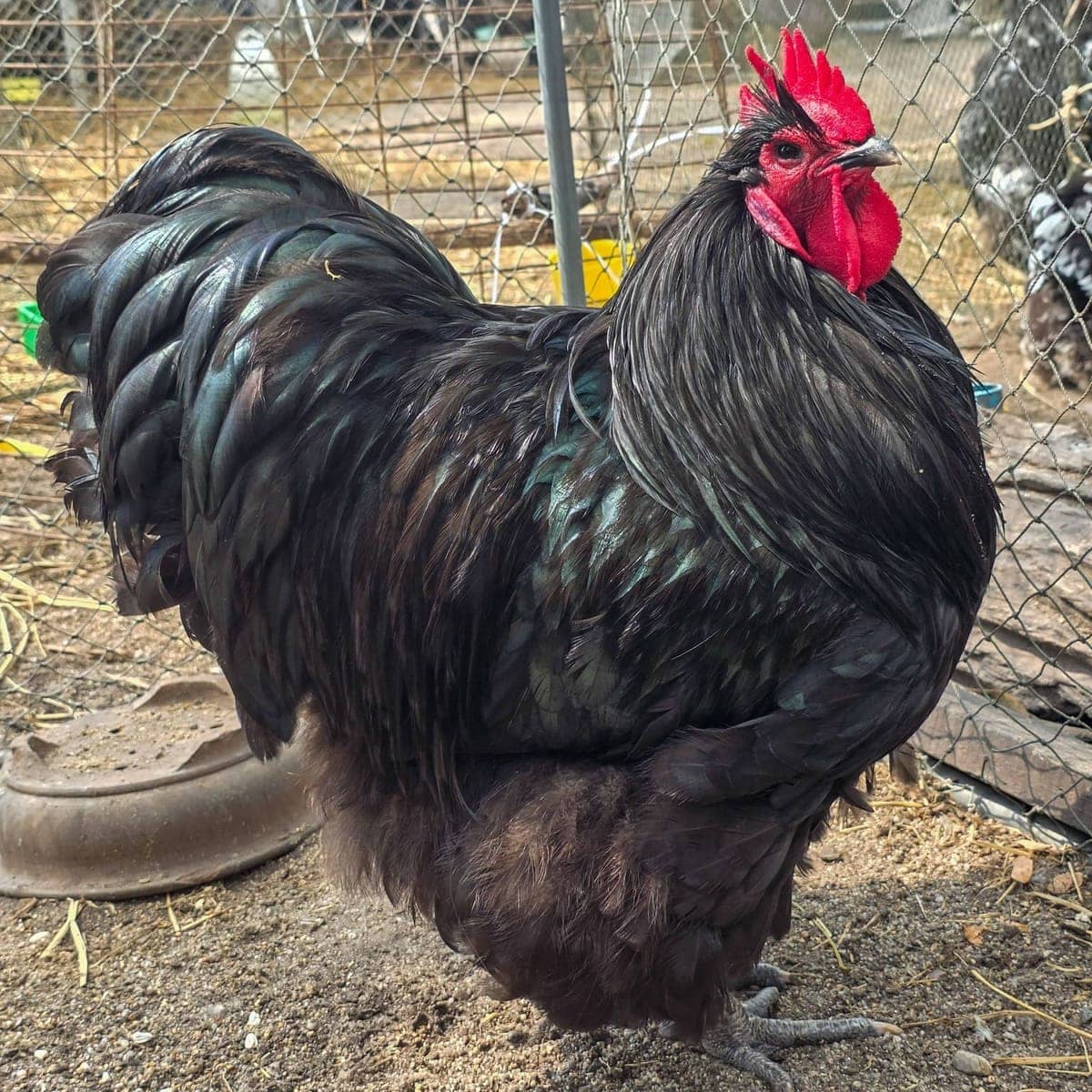
- Type: a broad, deep, heavy, cobby body with a slightly arched short back and a broad, deep, well-rounded breast
- Carriage: stately and dignified; the body sits relatively low to the ground; legs short; bearing steady
- Plumage: dense, full-coverage, soft — but close, not loose — distinct from the Cochin (which carries excessively long, fluffy plumage) and the Game Fowl (which is tightly feathered)
- Skin: white
- Overall impression: when viewed as a whole, a good Orpington carries the mass, fullness, and stately bearing characteristic of the British heritage fowl
Head and Face
- Head: medium, proportionate to the body
- Comb: single, small, firmly set, evenly serrated, free from side sprigs
- Wattles: medium, smooth
- Earlobes: red
- Eye: bright; colour varies by variety (red-orange in red and buff varieties; dark in black and lavender)
- Beak: strong, horn-coloured, in proportion to the head
Body
- Neck: medium to short, with full hackle plumage
- Back: broad and short, gently arched, flowing into the tail
- Breast: deep, broad, well rounded
- Abdomen: full, without being unduly pendulous
- Wings: medium in size, carried evenly without flare or lift
- Tail: short, full, carried at approximately 40 degrees above the line of the back
Legs
- Thighs: stout and powerful, but largely concealed by body plumage
- Shanks: short, strong, well set apart
- Shank colour: per variety (Black, Blue, Buff: typically dark/blue-grey; White, Lavender: white-flesh)
- Toes: four, straight, undeformed
- Toe-nails: matching shank colour
Size and Weight
Large Fowl
- Cock: 4.0–4.5 kg (approximately 10 lb)
- Hen: 3.0–3.5 kg (approximately 8 lb)
Bantam
- Cock: approximately 1.5 kg (38 oz)
- Hen: approximately 1.3 kg (34 oz)
The Bantam Orpington was recognised through the Bantam Orpington Club, founded in 1950, and accepted into the PCGB in 1952.
Recognised Colour Varieties (PCGB)
Original Varieties
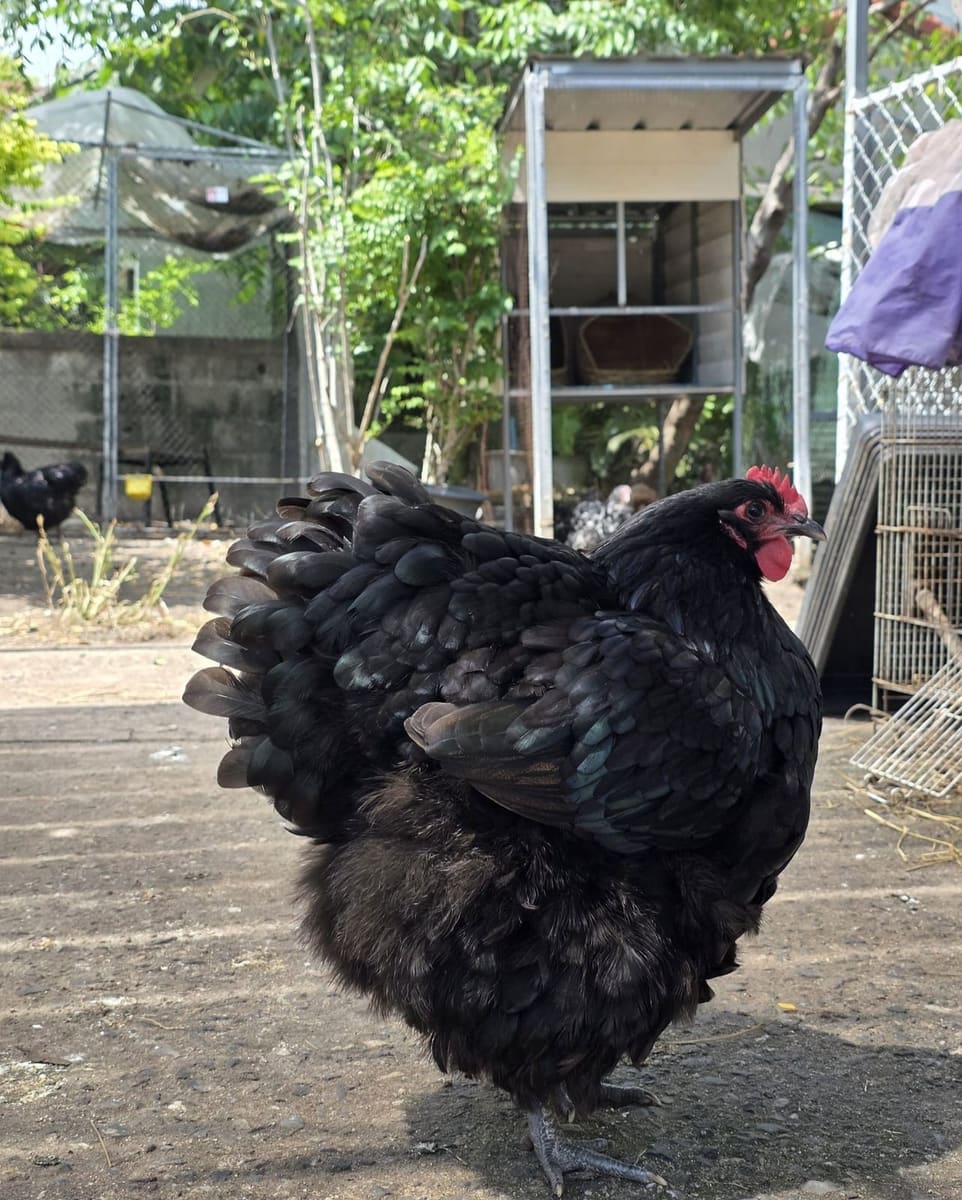
- Black — solid black throughout, with a green-black beetle sheen on the plumage; the original variety created by William Cook in 1886
- White — pure white throughout, free from any yellow tinge
Established Varieties
- Buff — even golden buff throughout, free from patterning or off-shade dark red
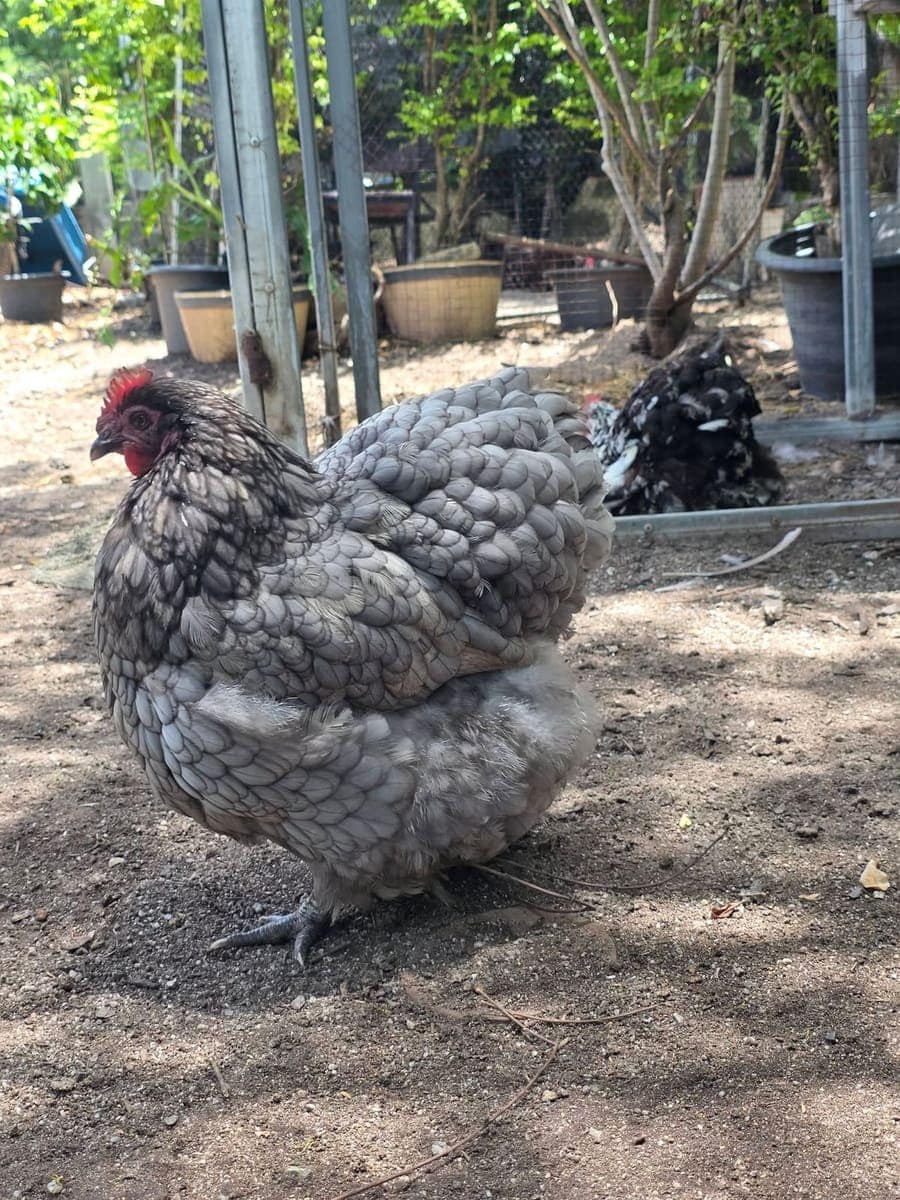
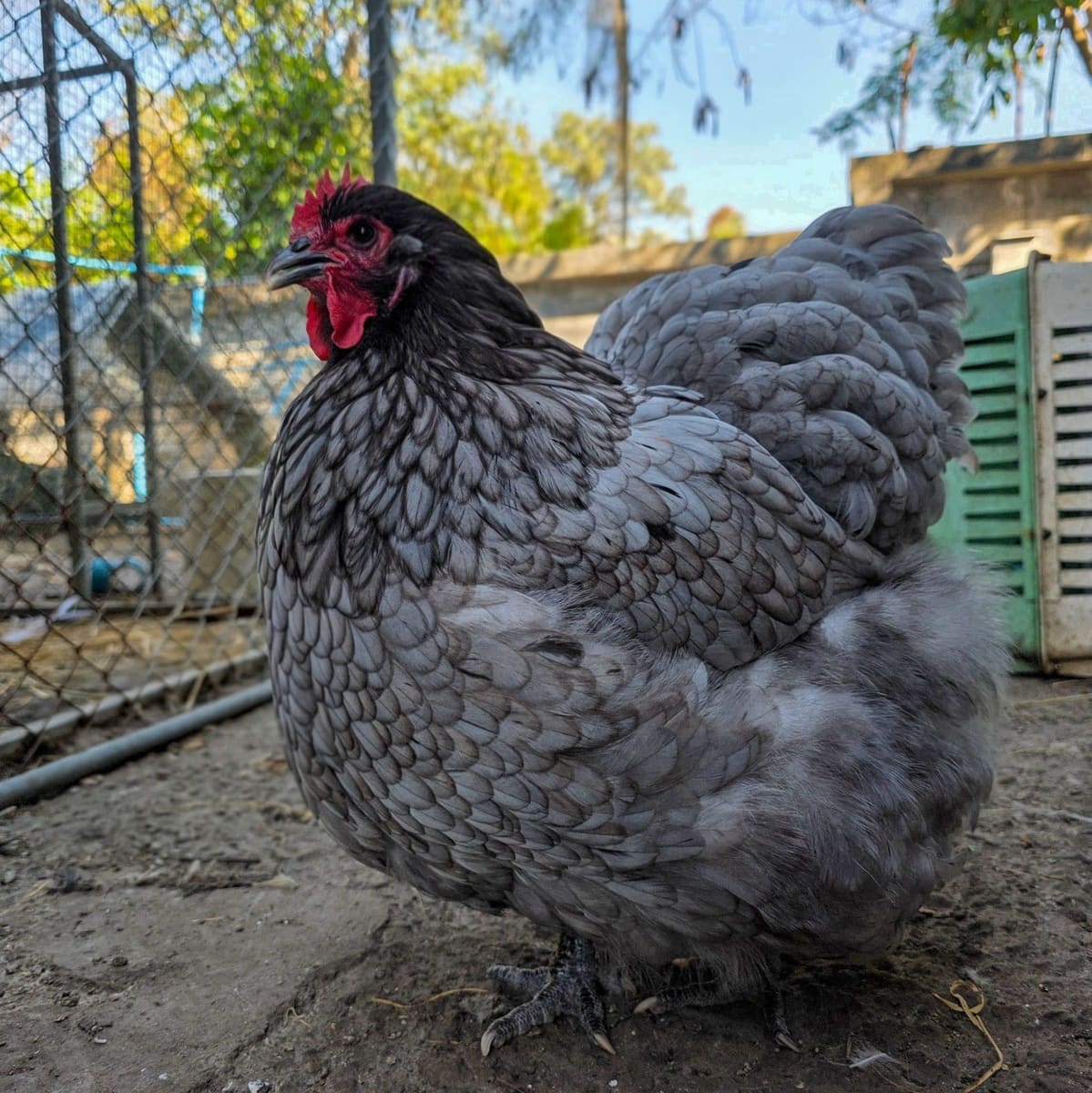
- Blue — Andalusian blue with darker plumage lacing
Modern Recognised Varieties
- Lavender (Self Blue) — even pale-grey throughout, without lacing — produced by the true lavender gene
- Splash — white base broken with patches of blue
- Spangled (Mottled) — coloured base with white tips on individual feathers
- Jubilee — cherry red with white tips and a black tail
- Cuckoo — alternating bands of light and dark grey across the feathers
Experimental Varieties
- Isabel, Mottled variants, additional Self Blue lines
PCGB colour standards may differ in detail from those of associations in other countries — particularly the APA (United States).
Faults
Disqualifying Faults
- Yellow skin or yellow shanks in any variety (PCGB enforces this strictly)
- Rose comb — only single combs are accepted in the breed
- Excessively long, loose plumage — contradicts the "close-feathered" character of the breed
- Narrow, long, or tall body — contradicts the "broad, deep, cobby" type
- Colour varieties outside those recognised by PCGB
Serious Faults
- Shallow body
- Overly long or sagging back
- Uneven base colour, particularly obvious colour leak
- In Black variety: brassy or red-leak markings on the hackle or saddle
- Damaged or broken feathering
Behavioural Traits
A good Orpington under the PCGB standard exhibits:
- Calm temperament — friendly to humans, suited to family backyard flocks
- Cold tolerance — the dense plumage suits the British climate
- Strong broodiness — a good Orpington hen raises her own chicks well
- Egg production: 200–250 brown eggs per year, declining with age
References
- British Poultry Standards, Poultry Club of Great Britain (PCGB), most recent edition
- The Orpington Club (UK), Breed Standard
- Cook, William. Standard-bred Orpingtons, 1911 (foundational document)
- Bantam Orpington Club, Bantam Orpington Standard
- United Orpington Club (USA — for comparative reference to APA)
— Issued by Tamahagane Garden for reference and educational use