Two Years with Orpington Chickens — Misconceptions Thai Keepers Need to Hear
Two years seriously raising Orpington chickens, 500–600 chicks produced — eight truths and care principles most keepers in Thailand still get wrong.
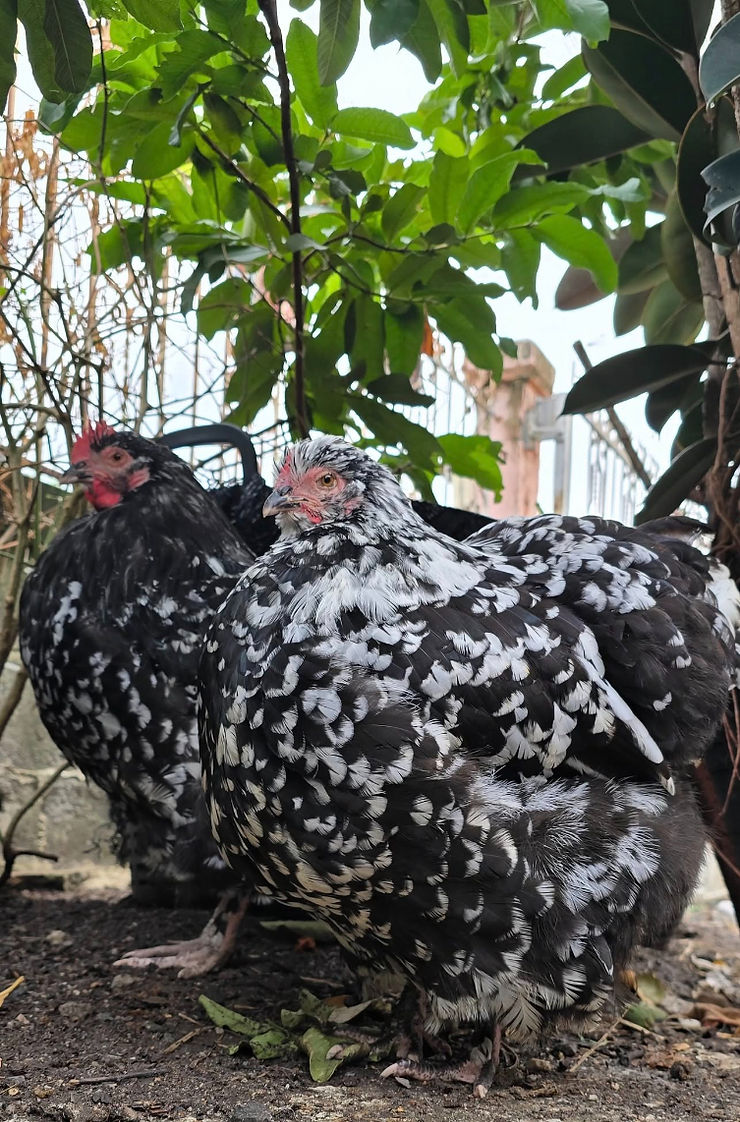
Hello — I'm Mai of Tamahagane Garden. After raising Orpington chickens seriously for the past 1–2 years and producing over 500–600 chicks, I've come to see that keepers in Thailand still carry a lot of misconceptions about this breed — especially the obsession with "color," to the point that some treat the color as the breed name. People say "Buff Orpington breed," when what they really mean is the Orpington breed in Buff variety.
Today I want to talk about the problems I've encountered from direct experience, and the correct approach to keeping these birds — to put some of those misconceptions to rest.
8 truths about raising Orpington chickens
1. "Meat-and-egg" is not just a marketing phrase
I repeat this constantly — in TikTok lives, in videos, in interviews — Orpington is a "meat-and-egg" (Dual-Purpose) breed. That single phrase is the clearest possible description of how to keep them. It means the bird requires more concentrated nutrition than either a pure egg-layer or a pure meat breed.
With their large size and dense, fluffy plumage, they need several times the nutrition of a regular bird. The feed must also be appetizing enough that the bird actually eats it. That's the reason our farm makes its own feed — and it's the answer to why our chicks have visibly higher survival rates than chicks raised elsewhere. Even imported breeding stock from us produces healthy offspring without breakdown.
We can sell chicks at moderate prices not because they're crossbreeds, but because we're raising them properly — making strong birds that produce as well as they do in their home countries.
2. A giant-framed bird that needs space
Because Orpingtons are large and eat a lot, they need adequate walking space to support their digestion — chickens have no teeth, so movement is part of the digestive process.
The minimum suitable enclosure is approximately 4 × 4 meters per pen. Ideally, they should also have access to a wider free-range area to forage for grass and leaves on their own. This gives the bird a more varied diet and prevents the build-up of toxins from eating the same processed feed over and over.
3. Not heat-tolerant, but adaptable
Orpingtons can tolerate heat to a degree (around 30–34°C), but only under the right conditions: shade, ventilation, and earth to play in. The bird will dig into the soil under a tree to cool itself. Letting them roll in dirt and sand isn't just about heat regulation — it also helps with digestion and keeps the bird clean without bathing.
4. Natural sunlight is non-negotiable
All chickens — not just Orpingtons — require natural sunlight to thrive. Sun is a primary source of vitamin D, which lets the body absorb calcium properly, which in turn supports egg laying.
This is precisely why Orpingtons in Thailand can lay more reliably than the western average — Thailand has stronger and longer sunlight than the European baseline. At our farm we don't drag the birds out to sun themselves; we build environments where they can choose to walk into the sun whenever they want. The sun also does excellent work killing pathogens and mold in the housing area.
5. High-quality droppings — a side effect of homemade feed
Because we make our own feed, the droppings at our farm produce very few flies — almost none unless it's raining — because the manure dries and decomposes quickly, leaving almost nothing behind.
This radiates outward in our 100% chemical-free system: less cleaning labour, less smell, no disease pressure on the birds themselves, and visibly lower infection rates across the flock.
6. Stop using prophylactic medications past the point of need
Prophylactic medication driven by aggressive marketing forces the kidneys of the bird to do unnecessary work. When a healthy bird is dosed continuously, the kidneys — which filter waste — work overtime until they reach a breaking point. Then when the bird actually does fall ill, it deteriorates rapidly.
This is particularly true of antibiotics. Misused, they breed resistant strains, making treatment when it's actually needed difficult or impossible. On top of that, most chicken medications in Thailand do not clearly state their ingredients — we have no idea what we're putting in the bird. Every keeper should apply more critical judgment here.
7. Pathogens in Thailand are crueller than people realise
Thailand sits in a hot, wet tropical zone with pathogen pressure that is more severe than the dry, cool European baseline. Worse, drug development here is profit-driven, and the improper use of antibiotics produces stronger and more resistant strains. Combined with chemical agriculture that breaks down the surrounding ecosystem, certain diseases now outbreak with significantly greater severity. We end up needing stronger and more expensive drugs over time — until the bird simply can't tolerate them and dies. This is one more reason raising Orpingtons in Thailand is exceptionally difficult.
8. The disaster of misdiagnosis and misdirected treatment
This is one of the principal problems in chicken keeping in Thailand: diagnosing disease by looking at external symptoms and jumping to conclusions. Different diseases often present with similar symptoms but completely different causes — for instance, white droppings can come from bacterial infection, protozoan infection, or even a digestive issue. But what we often see is a diagnosis of "this looks like what so-and-so's farm had" — followed by the same drug.
Another very dangerous case is the recommendation to inject a vaccine "to treat" after the bird is already sick.
The truth: vaccines are used to "prime immunity" in advance. They are not a treatment.
What actually happens: vaccinating a sick bird means introducing additional weakened pathogen into a body that is already struggling. The body must now fight harder, and the condition can deteriorate.
Sometimes the bird doesn't die, but it becomes too damaged to recover — or it becomes a disease carrier. Worse, some shops know this and still recommend it because they want to sell. This is exactly where the keeper must have information and apply judgment.
Closing thought
After two years walking alongside these birds, what I've learned is this: the heart of successful chicken keeping does not lie in chasing beautiful colors or relying on miracle medications. It lies in "returning to the fundamentals and genuinely understanding the nature of the animal."
Building a good environment, feeding them properly, observing them, learning from the birds themselves — that is the strongest protection. Keeping chickens is not about following the textbook; it is the art of adapting knowledge to the context of your land and the nature of the living creature in front of you. I hope every keeper enjoys the learning, and uses good judgment to take care of our fellow inhabitants of this world as well as they can.
From the heart, Mai of Tamahagane Garden