Why Orpington — A Heritage Breed That Actually Belongs in a Real Home
The Orpington isn't a magazine-cover bird kept just for the photo. It's a breed that genuinely adapts to a real home — giving eggs, calm, and steady companionship. Nine reasons I chose them.
{/* og-image source: https://static.wixstatic.com/media/2b52f0_20f30c7295524f70b374db79ad615ec3~mv2.jpg */}
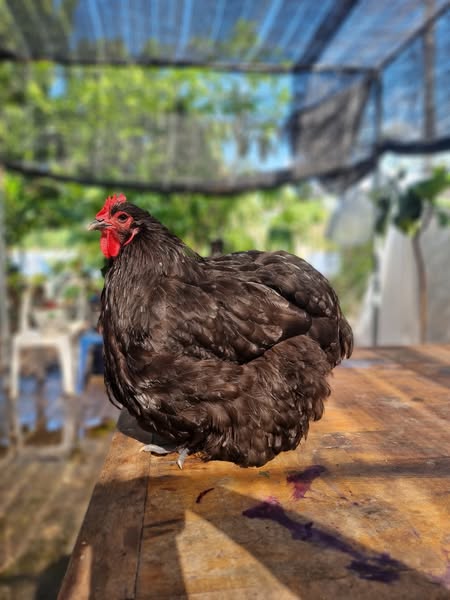
The Orpington is not the glossy magazine-cover chicken you keep just for the photo. It is an animal that gives you eggs, calm, softness, and an understanding of life.
It's a chicken you can actually keep at home — not just in your imagination — and one that can genuinely be "a friend to people who stay home, who run a farm, or even to a city family."
So why Orpington, and not some other breed?
1. Suited to Thai homes and modern life
- Short wings, low flight ceiling → fine for a yard with a not-very-tall fence.
- Affectionate but quiet → can be kept in enclosed spaces without bothering the neighbours.
- Slow-walking and rotund → won't climb the car, won't escape onto the roof.
2. Polite, friendly, not aggressive
- Easy for beginners because they're easy to care for.
- Easy to pick up for a health check, to give medicine, or to carry around — they don't thrash.
- Even the roosters don't attack people — at worst they'll peck at you lightly because they thought a fleck of dirt was food.
- Households with small kids → safely free of any "chicken rider-kick" incidents (as long as the kid doesn't start it).
3. Lay well — but not in a way that ruins the bird
- 200–250 eggs a year (not pushed to the point of illness like industrial layers).
- Lifespan of 5+ years if cared for properly → long-laying, not quick to die.
- There's a record of an American Orpington that lived to 25 (she didn't lay the whole time, of course).
4. Round, friendly, and they film well
- Round but not lethargic → easier to train tricks than you'd think.
- Great for cute content — you can carry them, train them to follow you.
- Smart enough — especially if you raise them with understanding.
5. The widest colour range in their group of breeds
- Buff, Black, Blue, Lavender, Splash, Isabel, Sprite, and so on.
- Whatever colour of layer you want, you can hand-pick a full set for your flock.
6. They flock well together
- Especially the hens → calm temperament, no bullying.
- Given enough space and feed, they can be kept in medium-to-large flocks without pecking fights breaking out.
7. Global market demand
- Even a one-month-old chick in Thailand can sell for 300–1,000+ baht.
- A mature bird from a good line sells for thousands — or tens of thousands of baht — and that's true even back in their European homeland.
- These aren't beginner-trap chickens with inflated prices → they are a breed with real value in a real market.
8. Cold-hardy, rain-hardy — but watch out for "bid" (coccidiosis)
- Thai weather isn't a major problem for them as long as they have a dry place to be.
- Coccidiosis (โรคบิด) does turn up in Thailand — you need to manage ground conditions and humidity properly.
9. Good mothers, disciplined, raise their own chicks well
- A mature Orpington hen will mother her own chicks (though I don't recommend letting the broody hen raise them on her own in Thailand — the heat can kill them as early as the brooding stage).
- She'll sit the eggs through to hatching; eggshells are thick, chicks come out strong.
- If you're not in a hurry to scale up with an incubator, you can let the hen brood naturally and it works just fine.
The Orpington isn't just "pretty" or "tame." It's a breed that genuinely adapts, that genuinely belongs in a home, and that you can care for without it wrecking the rhythm of the household. It suits anyone who wants to keep chickens sustainably — not just for the eggs, but for the bond you form with an animal you live alongside, with respect.
If you want to start keeping chickens but don't know where to begin —
The Orpington is probably the most reasonable answer you can pick.
— Tamahagane Garden