Why Akita Inu — A Breeder's Case for the Japanese Standard
Loyalty, courage, intelligence, dignity, low maintenance — nine reasons I picked the Japanese Akita Inu as the dog to share a home with, drawn from raising 16 of them at the kennel and ~20 more placed with clients.
{/* og-image source: https://static.wixstatic.com/media/2b52f0_694f5231180946a582617fc57c308053~mv2.jpg */}
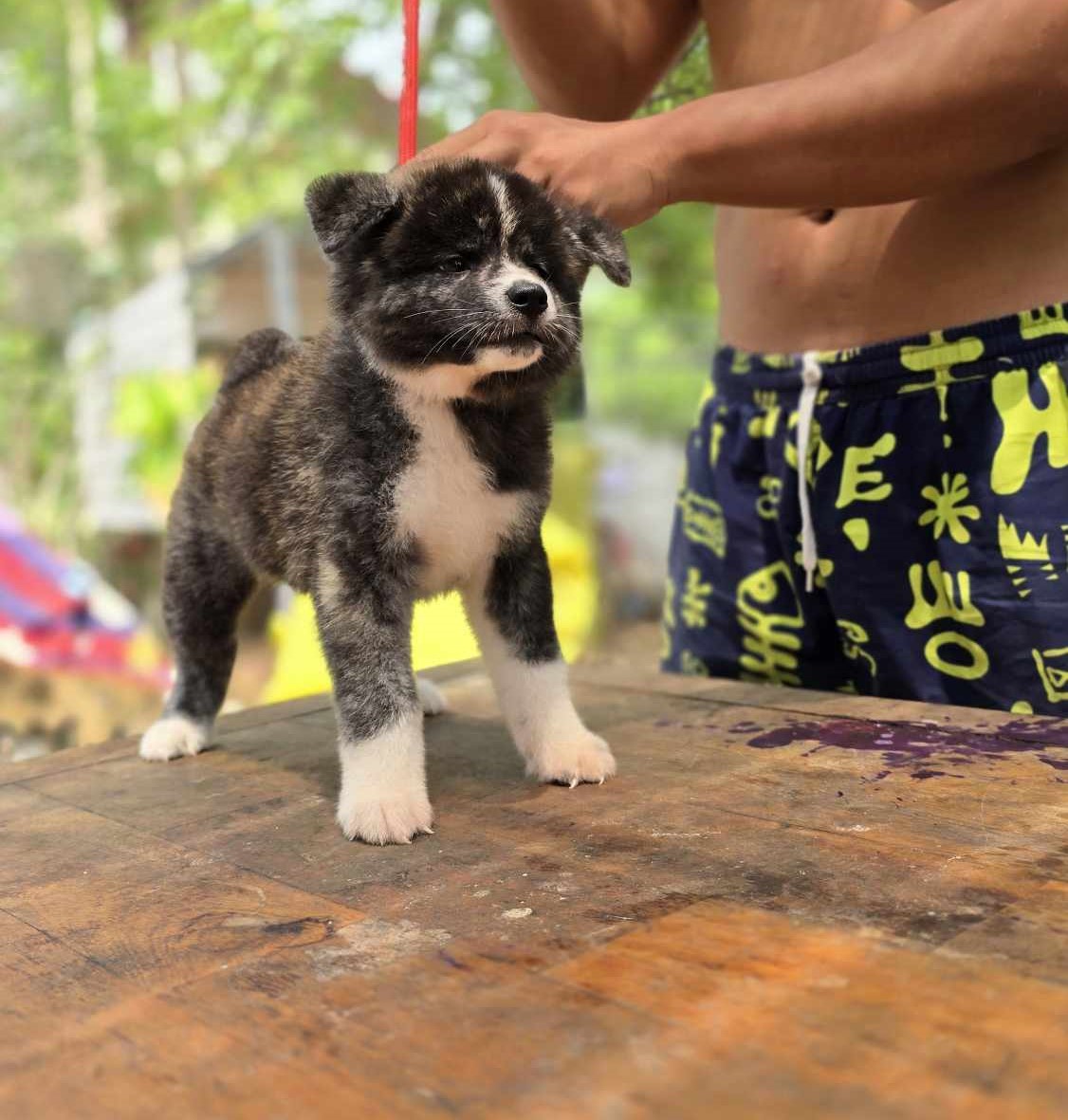
The Japanese Akita Inu (Akita Inu) is a breed of distinct identity and quiet magnetism. Here are the reasons I chose this dog to share a home with — and to build a kennel around.
1. Loyalty and faithfulness
To be honest, I'd rather not lean on this one — these words can sound like they put other breeds down, and I don't enjoy that. But the Akita Inu is genuinely known for unshakable loyalty. They bond to a family and they stay ready to defend its members. That's not marketing — it's just what they do.
2. Courage, and a quiet protectiveness
Most Japanese Akita, especially from our kennel, fear nothing and no one. With systematic, correct training, they become guardians wearing soft faces — friendly to look at, formidable to anyone who needs to think twice. They are ready to fight to protect home and family, but they don't go looking.
3. Intelligence — quick to learn, but the communication has to be clear
The Akita is sharp and picks up new commands and skills quickly, provided your communication is clean and your discipline is consistent. Use distinct tones for play, command, and serious moments — they read tone faster than vocabulary.
Our dogs at home adapt to every new way of getting into mischief. When you correct them, you have to be precise: "do not play with anything on the floor" still leaves a shelf-height world open to be raided, unless you teach the full rule.
4. Presence and a distinct silhouette
A good Japanese Akita carries dignity. Not thin, not whippet-built — coat thick, body shaped like a tall, broad warrior. Heavy frame, not slender. Tail curled and full. Coat dense and plush. Eyes resolute, calm, with command in them.
5. Patience and gentleness — with children and the elderly, when trained
Properly introduced, the Japanese Akita is gentle with everyone inside the home. Some of our dogs — Kurumi, Byakuren, Usagi — once lived with my grandmother, who was 82 and walked with difficulty. They learned to walk slowly beside her, watching for hazards around her, even when they were only two or three months old. They just needed to be shown how, in a language they understood.
6. Quiet
The Japanese Akita is, in plain terms, quiet-mouthed. We once kept three of them in a housing estate and the neighbors didn't even know we had dogs — that quiet. Most don't bark for no reason (most — there are exceptions). They bark when someone untrustworthy gets too close to their territory, and that's about it.
7. Surprisingly low exercise needs
The Japanese Akita requires very little daily exercise. Yes — very little. Our climate is hot. Personally, if a day looks too warm, I skip the walk altogether. You don't need to run them — brisk walking does the job. Fifteen to twenty minutes a day is plenty to keep them healthy and stop them from tearing the house apart. (My grown dogs, 1–2 years old and up, can go a month without a walk and not have a problem.)
8. Clean by nature
The Akita is genuinely a clean dog. Once grown, they avoid mess. Puppies can be exceptions if it's hot or the individual is hyperactive, but adults learn to relieve themselves in the right place easily — the one exception is intact-male scent marking, which needs its own training technique. Their coat and body don't get dirty quickly, and they don't carry the doggy smell even when it's been a while since their last bath. The Akita doesn't have the "wet-dog stench," and they tend to groom themselves on top of it.
9. Good with smaller animals, if trained
This one is the most visible at our place. Our dogs lived with cats from day one with no special training, and they live with chickens too — protecting them rather than hunting them. With just a small amount of correct training, all 16 of my dogs are willing to defend the flock from monitor lizards and snakes. Akita, by default, do not enjoy hunting things that pose no challenge — much smaller dogs or smaller animals. The exceptions are real prey (wild birds) or animals where the size mismatch is dramatic but the engagement is challenging — worth being careful there.
These observations come from the 16 dogs we keep at home, plus another twenty or so living with our clients. Akita bloodlines in Thailand — and worldwide — vary, and so do temperaments to a degree. But the Japanese Akita is, at its core, a striking and dignified dog. Once you understand the detail, you find it's not actually difficult to keep, relative to other breeds. The reason other breeds seem easier is mostly that their marketing has stripped out the parts you actually need to know about.
— Tamahagane Garden