Breeder's Diary, Part 4 — Red Leak, Black Star, and a Pup with Boot-Length Feathers
Field notes from breeding Black Star Orpington into Blue: red-leak at chick stage that resolved, a 2.5-month-old pup with feathers down to its hocks, and a reminder — type is king, color you can fix later.
{/* og-image source: https://static.wixstatic.com/media/2b52f0_6ab4a3da349c4867a54e5371df1d6f3b~mv2.jpg */}
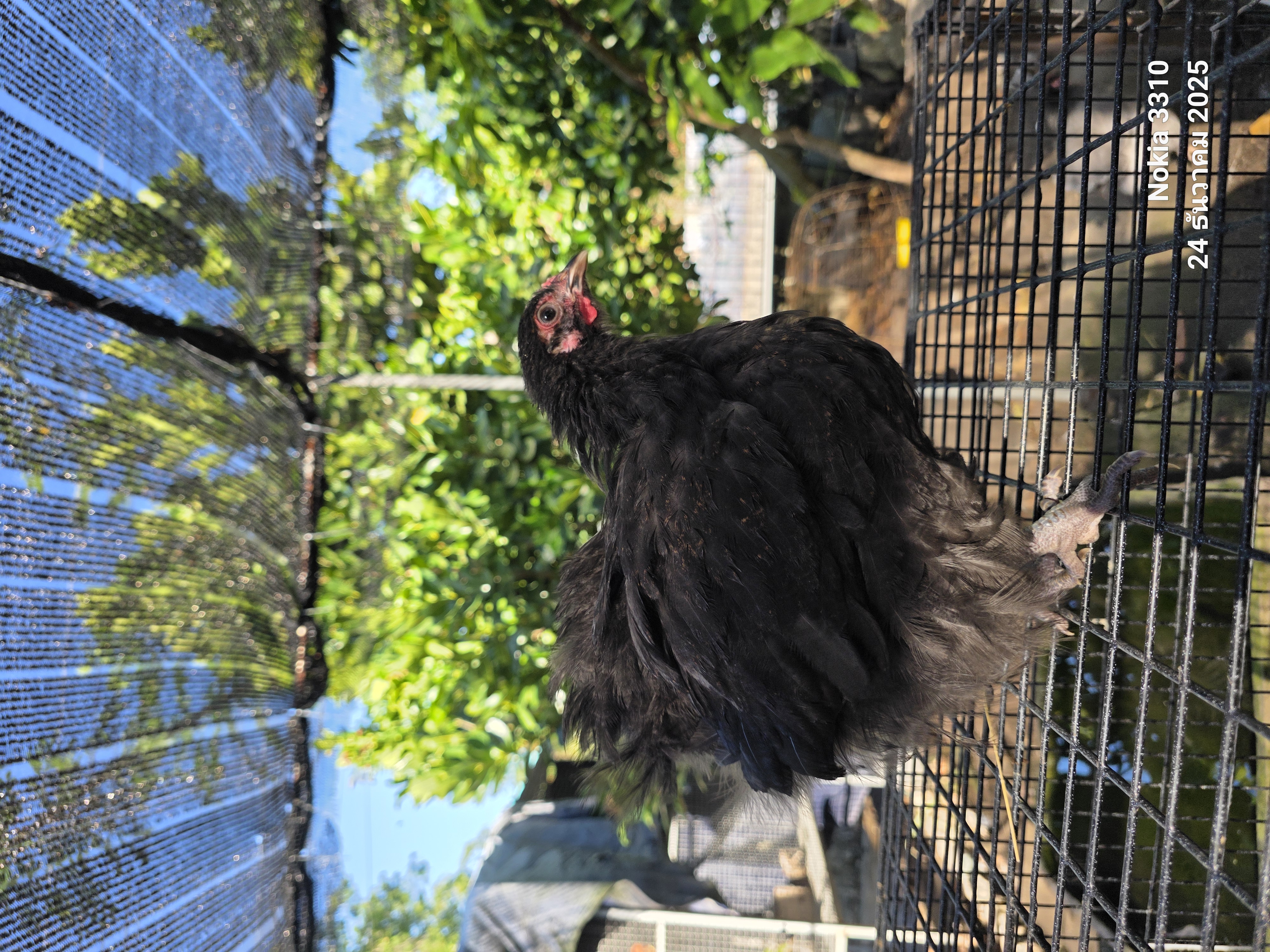
Back again after a long stretch away — I went to deliver chickens to Maple Garden and then had a lot of housekeeping to sort out, including a tick attack and other things I only finally cleared today. So today let me write about the good stuff. There's so much I barely know where to start, so I'll take chickens first; the dogs can wait for Part 5, but I promise that one won't be any less exciting — what with the growth of Nikimitama going at the same ferocious pace as the color of its coat.
The story here is that this batch of chicks started as offspring of Black Star, a show line out of Europe — I think from a guy called Jamie or something — and I bred them out into the second generation by crossing into a Blue female. Honestly, I prefer Blue males, but the plan was to sell most of the first run because the orders were stacked up. The black chicks then threw a problem I'd never seen before: red at the feather tips, which had me slightly worried. I knew the theory — it should fade as they grow — but I was still secretly afraid that it might persist as red leak into adulthood. So I picked the chicks that came out pure black from the start and sent those to anyone anxious about it, and kept the more visibly-red ones for myself to watch as they grew.
I was confident they'd come back black. And that's what happened — for the ones with red only at the feather tips. The reason red that stays into adulthood does so is that Pheomelanin (controlling red) overcomes Eumelanin (controlling black). It wouldn't be much red, but I figured the visible red would be confined to the area around the neck, and the pattern of that red would be either full-length-red strands or Penciling — a signature of the Columbian gene inherited from a Buff in the ancestry. (Why we go through Buff between Black at all — that's a long topic for another day.)
Aside from the color, some pups came out with unusually short body proportions — meaningfully shorter than their siblings, but with no spinal curvature, no bent legs, no skeletal deformity. Just shorter. As they grew up a little, those same chicks ended up with long fluffy feathers from as early as two months old. I got several like this, both Black and Blue. The most special one had feathers along the lower legs that reached the hocks at just 2.5 months, a small short comb, normal facial bone, and normal-length legs (the bird in the cover photo above). That one is going to be excellent down the line.
So to sum up: just a note to self that Red Leak isn't a disaster — it's manageable if you don't double down on it. Whatever happens, prioritize type first. Across any standard, any show, any club —
Type is king.
Color you can breed out later. That's the easy part.
— Tamahagane Garden